Ayurvedic Management of Garbhasaya Granthi with Reference to Uterine Fibroid
DOI:
https://doi.org/10.47070/ijapr.v11iSuppl3.2858Keywords:
Bleeding, Fibroids, Grabhasaya granthi, LeiomyomaAbstract
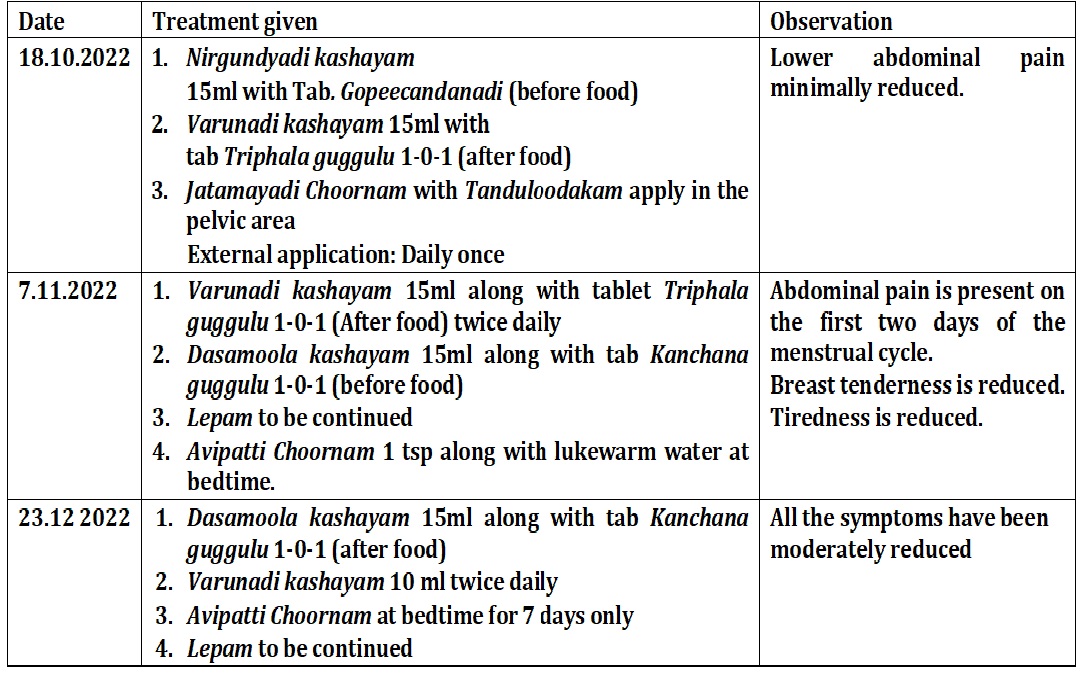
Uterine fibroids ranked as the major reason for hysterectomy. Uterine leiomyomata (also called fibroids and myomas) represent localized proliferation of smooth muscle cells surrounded by a pseudocapsule of compressed muscle fibers. Fibroids are dependent on estrogen and progesterone to grow and therefore relevant only during the reproductive years, they are expected to shrink after menopause. In India the prevalence of uterine fibroids (fibromyoma/leiomyoma) among women hovers between 30-50%. Majority women with fibroids are asymptomatic but in some women they show many symptoms like menstrual abnormality i.e., menorrhagia, metrorrhagia, polymenorrhea, dysmenorrhoea, dyspareunia, pressure symptoms, lower abdominal or pelvic pain, abdominal enlargement, infertility, increase frequency of micturition etc due to their size, number or location. In Ayurveda, fibroids can be correlated with Granthi. In specific, it can be correlated with Mamsaja granthi. Treatment of Granthi can be done in both by Shodana and Samana line of treatment. A woman aged 34, treated with Samana oushadhi like Dasamoola kashayam, Varanadi kashayam etc for 6 months and there is noticeable reduction in the size of fibroid.
Downloads