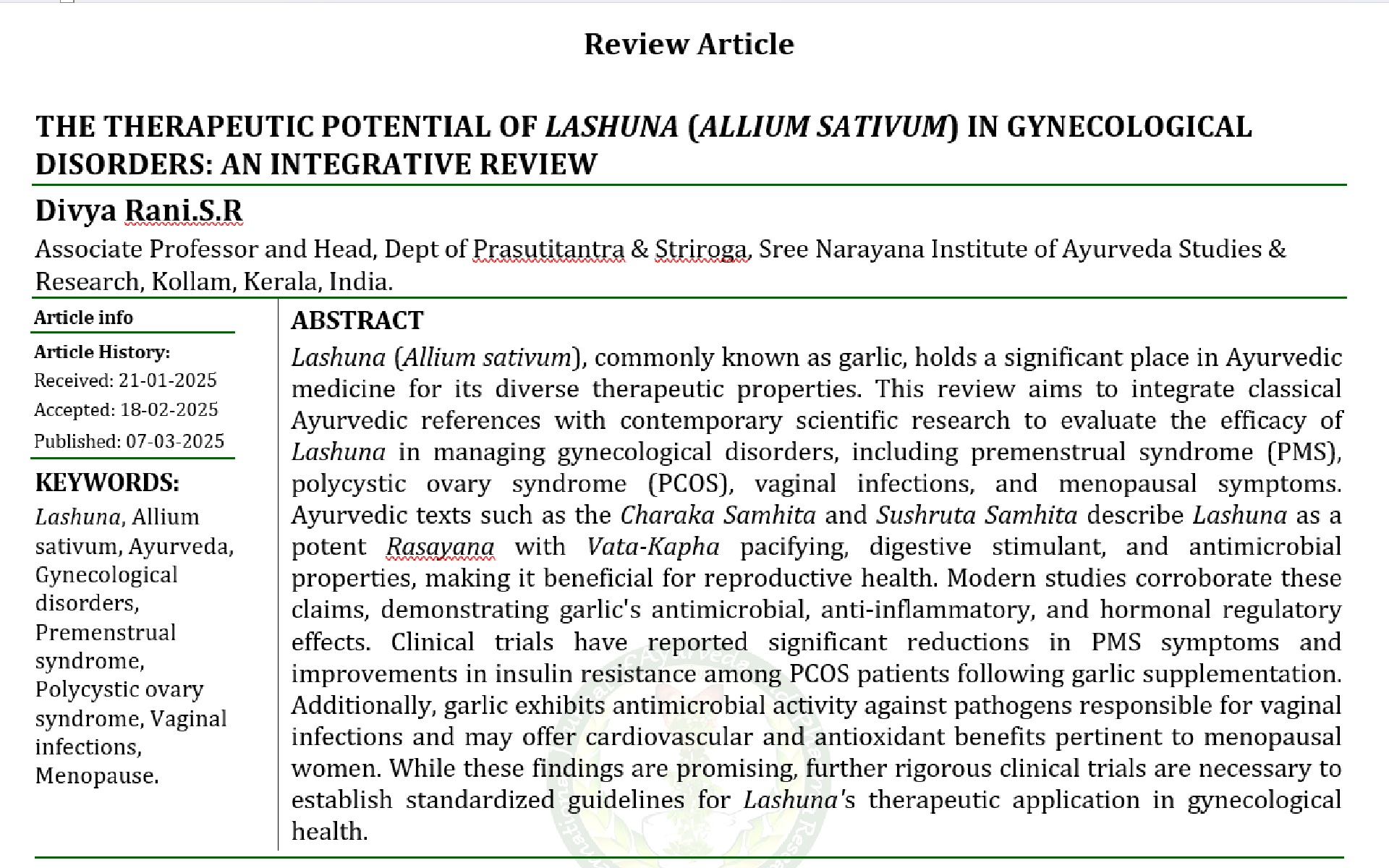
The Therapeutic Potential of Lashuna (Allium sativum) in Gynecological Disorders: An Integrative Review
DOI:
https://doi.org/10.47070/ijapr.v13i2.3569Keywords:
Lashuna, Allium sativum, Ayurveda, Gynecological disorders, Premenstrual syndrome, Polycystic ovary syndrome, Vaginal infections, MenopauseAbstract
Lashuna (Allium sativum), commonly known as garlic, holds a significant place in Ayurvedic medicine for its diverse therapeutic properties. This review aims to integrate classical Ayurvedic references with contemporary scientific research to evaluate the efficacy of Lashuna in managing gynecological disorders, including premenstrual syndrome (PMS), polycystic ovary syndrome (PCOS), vaginal infections, and menopausal symptoms. Ayurvedic texts such as the Charaka Samhita and Sushruta Samhita describe Lashuna as a potent Rasayana with Vata-Kapha pacifying, digestive stimulant, and antimicrobial properties, making it beneficial for reproductive health. Modern studies corroborate these claims, demonstrating garlic's antimicrobial, anti-inflammatory, and hormonal regulatory effects. Clinical trials have reported significant reductions in PMS symptoms and improvements in insulin resistance among PCOS patients following garlic supplementation. Additionally, garlic exhibits antimicrobial activity against pathogens responsible for vaginal infections and may offer cardiovascular and antioxidant benefits pertinent to menopausal women. While these findings are promising, further rigorous clinical trials are necessary to establish standardized guidelines for Lashuna's therapeutic application in gynecological health.
Downloads