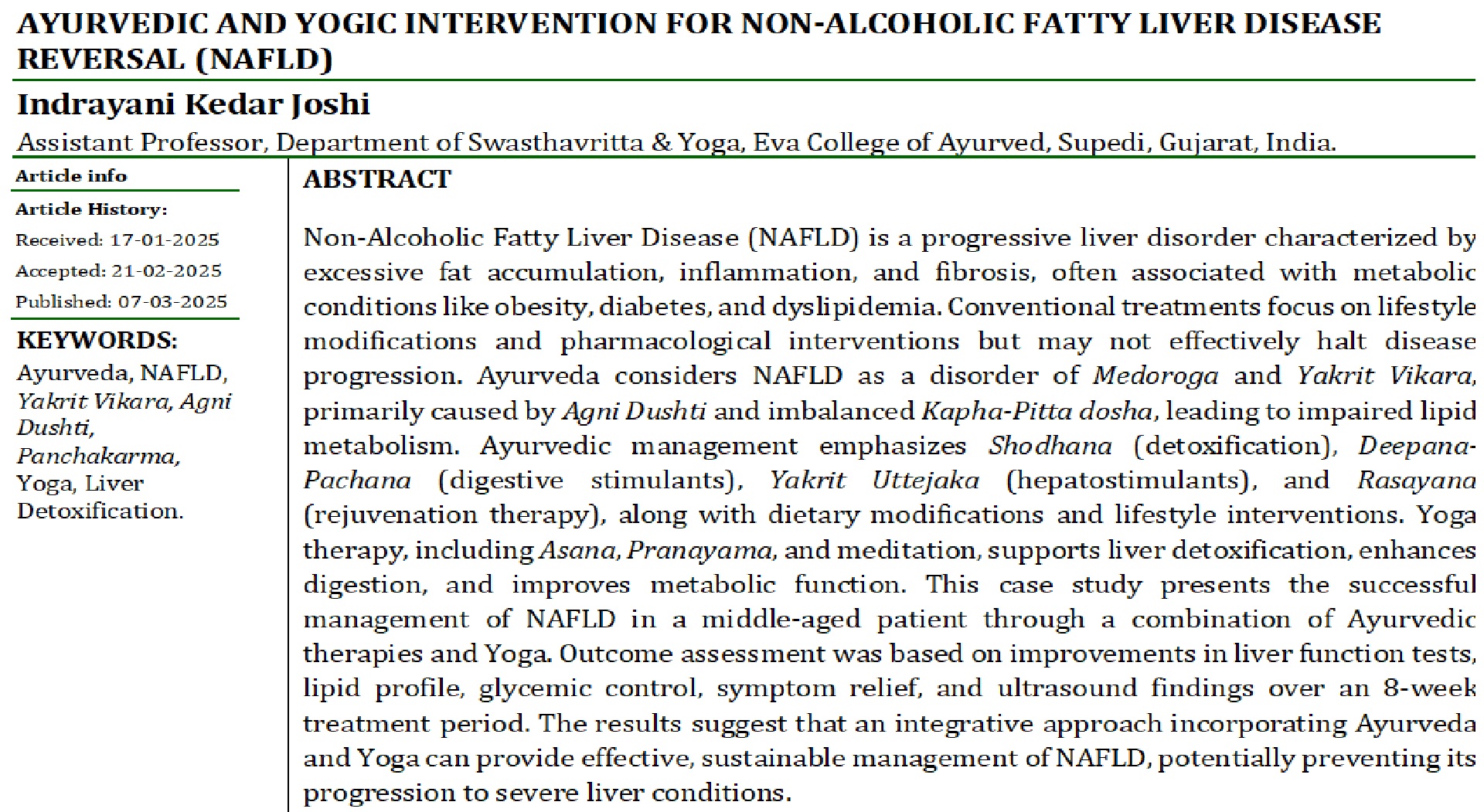
Ayurvedic and Yogic Intervention for Non-Alcoholic Fatty Liver Disease Reversal (NAFLD)
DOI:
https://doi.org/10.47070/ijapr.v13i2.3558Keywords:
Ayurveda, NAFLD, Yakrit Vikara, Agni Dushti, Panchakarma, Yoga, Liver DetoxificationAbstract
Non-Alcoholic Fatty Liver Disease (NAFLD) is a progressive liver disorder characterized by excessive fat accumulation, inflammation, and fibrosis, often associated with metabolic conditions like obesity, diabetes, and dyslipidemia. Conventional treatments focus on lifestyle modifications and pharmacological interventions but may not effectively halt disease progression. Ayurveda considers NAFLD as a disorder of Medoroga and Yakrit Vikara, primarily caused by Agni Dushti and imbalanced Kapha-Pitta dosha, leading to impaired lipid metabolism. Ayurvedic management emphasizes Shodhana (detoxification), Deepana-Pachana (digestive stimulants), Yakrit Uttejaka (hepatostimulants), and Rasayana (rejuvenation therapy), along with dietary modifications and lifestyle interventions. Yoga therapy, including Asana, Pranayama, and meditation, supports liver detoxification, enhances digestion, and improves metabolic function. This case study presents the successful management of NAFLD in a middle-aged patient through a combination of Ayurvedic therapies and Yoga. Outcome assessment was based on improvements in liver function tests, lipid profile, glycemic control, symptom relief, and ultrasound findings over an 8-week treatment period. The results suggest that an integrative approach incorporating Ayurveda and Yoga can provide effective, sustainable management of NAFLD, potentially preventing its progression to severe liver conditions.
Downloads