Effect of Ginger Against Arsenic Induced Toxicity on Hepatic Organ
DOI:
https://doi.org/10.47070/ijapr.v13i1.3510Keywords:
Ginger, Arsenic-induced hepatotoxicity, Antioxidant, Anti-inflammatory, Hepatoprotection, Reactive oxygen speciesAbstract
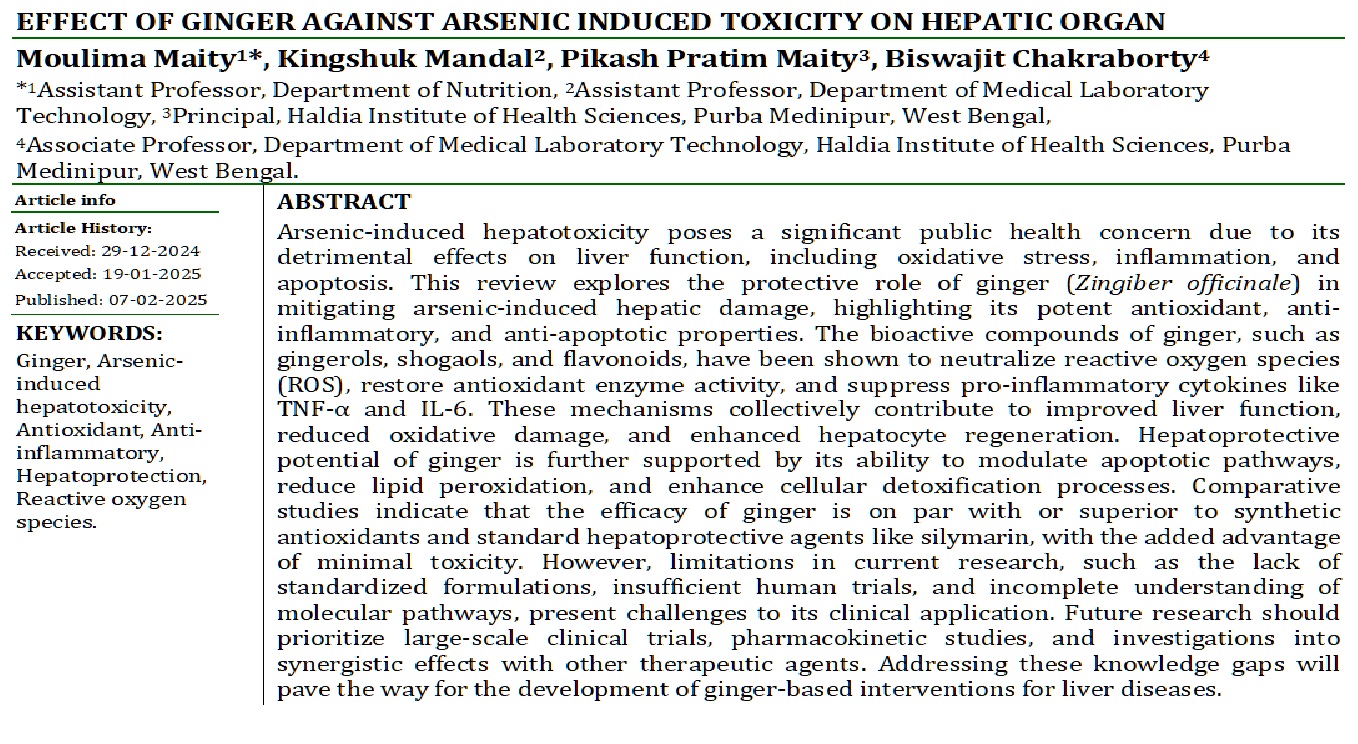
Arsenic-induced hepatotoxicity poses a significant public health concern due to its detrimental effects on liver function, including oxidative stress, inflammation, and apoptosis. This review explores the protective role of ginger (Zingiber officinale) in mitigating arsenic-induced hepatic damage, highlighting its potent antioxidant, anti-inflammatory, and anti-apoptotic properties. The bioactive compounds of ginger, such as gingerols, shogaols, and flavonoids, have been shown to neutralize reactive oxygen species (ROS), restore antioxidant enzyme activity, and suppress pro-inflammatory cytokines like TNF-α and IL-6. These mechanisms collectively contribute to improved liver function, reduced oxidative damage, and enhanced hepatocyte regeneration. Hepatoprotective potential of ginger is further supported by its ability to modulate apoptotic pathways, reduce lipid peroxidation, and enhance cellular detoxification processes. Comparative studies indicate that the efficacy of ginger is on par with or superior to synthetic antioxidants and standard hepatoprotective agents like silymarin, with the added advantage of minimal toxicity. However, limitations in current research, such as the lack of standardized formulations, insufficient human trials, and incomplete understanding of molecular pathways, present challenges to its clinical application. Future research should prioritize large-scale clinical trials, pharmacokinetic studies, and investigations into synergistic effects with other therapeutic agents. Addressing these knowledge gaps will pave the way for the development of ginger-based interventions for liver diseases.
Downloads