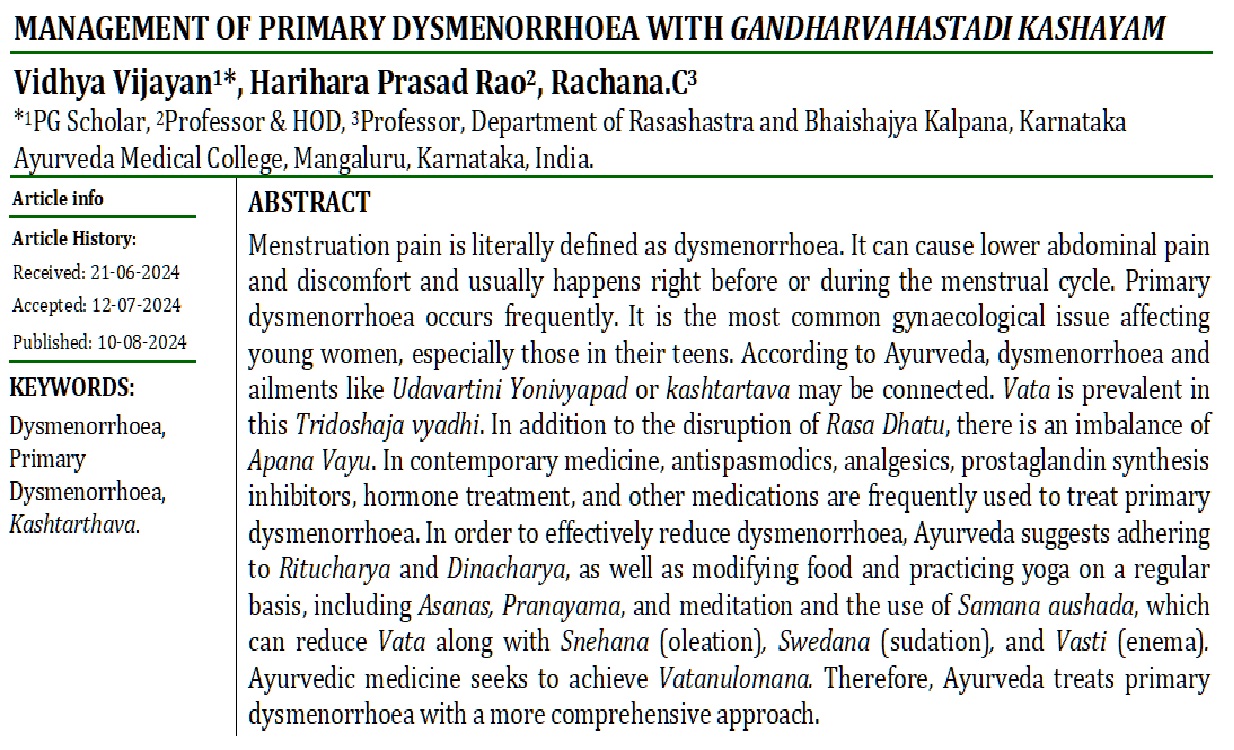
Management of Primary Dysmenorrhoea with Gandharvahastadi Kashayam
DOI:
https://doi.org/10.47070/ijapr.v12i7.3322Keywords:
Dysmenorrhoea, Primary Dysmenorrhoea, KashtarthavaAbstract
Menstruation pain is literally defined as dysmenorrhoea. It can cause lower abdominal pain and discomfort and usually happens right before or during the menstrual cycle. Primary dysmenorrhoea occurs frequently. It is the most common gynaecological issue affecting young women, especially those in their teens. According to Ayurveda, dysmenorrhoea and ailments like Udavartini Yonivyapad or kashtartava may be connected. Vata is prevalent in this Tridoshaja vyadhi. In addition to the disruption of Rasa Dhatu, there is an imbalance of Apana Vayu. In contemporary medicine, antispasmodics, analgesics, prostaglandin synthesis inhibitors, hormone treatment, and other medications are frequently used to treat primary dysmenorrhoea. In order to effectively reduce dysmenorrhoea, Ayurveda suggests adhering to Ritucharya and Dinacharya, as well as modifying food and practicing yoga on a regular basis, including Asanas, Pranayama, and meditation and the use of Samana aushada, which can reduce Vata along with Snehana (oleation), Swedana (sudation), and Vasti (enema). Ayurvedic medicine seeks to achieve Vatanulomana. Therefore, Ayurveda treats primary dysmenorrhoea with a more comprehensive approach.
Downloads