Conceptual Understanding of Non-Alcoholic Fatty Liver Disease
DOI:
https://doi.org/10.47070/ijapr.v10i8.2494Keywords:
Non-alcoholic fatty liver disease, Santharpanajanya vyadhi, Yakrit roga.Abstract
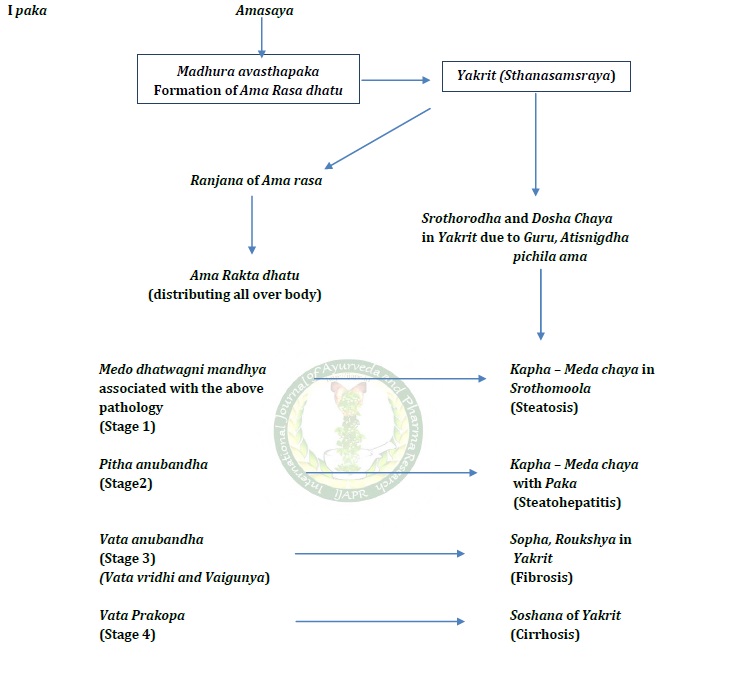
Non-alcoholic fatty liver disease (NAFLD) encompasses a spectrum of liver pathology with different clinical prognoses; from the simple accumulation of triglycerides within hepatocytes (simple steatosis) to more progressive steatosis with associated hepatitis, fibrosis, cirrhosis, and in some cases hepatocellular carcinoma. Non-alcoholic fatty liver disease (NAFLD) is one of the leading causes of chronic liver injury across the world. It is also strongly related to other pathological conditions, including obesity, diabetes, cardiovascular diseases, and symptoms of metabolic syndrome. Ayurveda also vividly describes Liver Diseases in the context of Kamala (jaundice) and Yakrit Roga (liver diseases) in different classical texts. It can be interpreted as a Santharpanotha Vyadhi (disease which caused by taking excessive nourishing diet) with vitiation of Kapha and Medas, getting Sthanasamsraya in Yakrit (liver) which is Rakthavaha-srothomoola and Pithasthana (location of body humour Pitha).
This review will give a better knowledge of etiopathogenesis, as well as a therapeutic method for managing patients by breaking the pathogenesis chain. In this section, we explore the etiology and consequences of NAFLD, along with the therapeutic treatment to this prevalent condition.
Downloads